Every year around June 20–21, the Northern Hemisphere experiences the summer solstice, the longest day and shortest night of the year. For thousands of years, cultures across the world have celebrated this astronomical moment because it symbolizes light, life, fertility, and the peak of summer.
Ancient civilizations observed the movement of the sun closely. When the sun reached its highest point in the sky, communities gathered to celebrate with rituals, bonfires, music, and festivals. Even today, modern celebrations still reflect those ancient traditions.
From dancing around maypoles in Scandinavia to watching the sunrise at prehistoric monuments, the summer solstice is celebrated in many unique and fascinating ways. These celebrations bring together history, culture, nature, and community, making them unforgettable experiences for both locals and travelers.
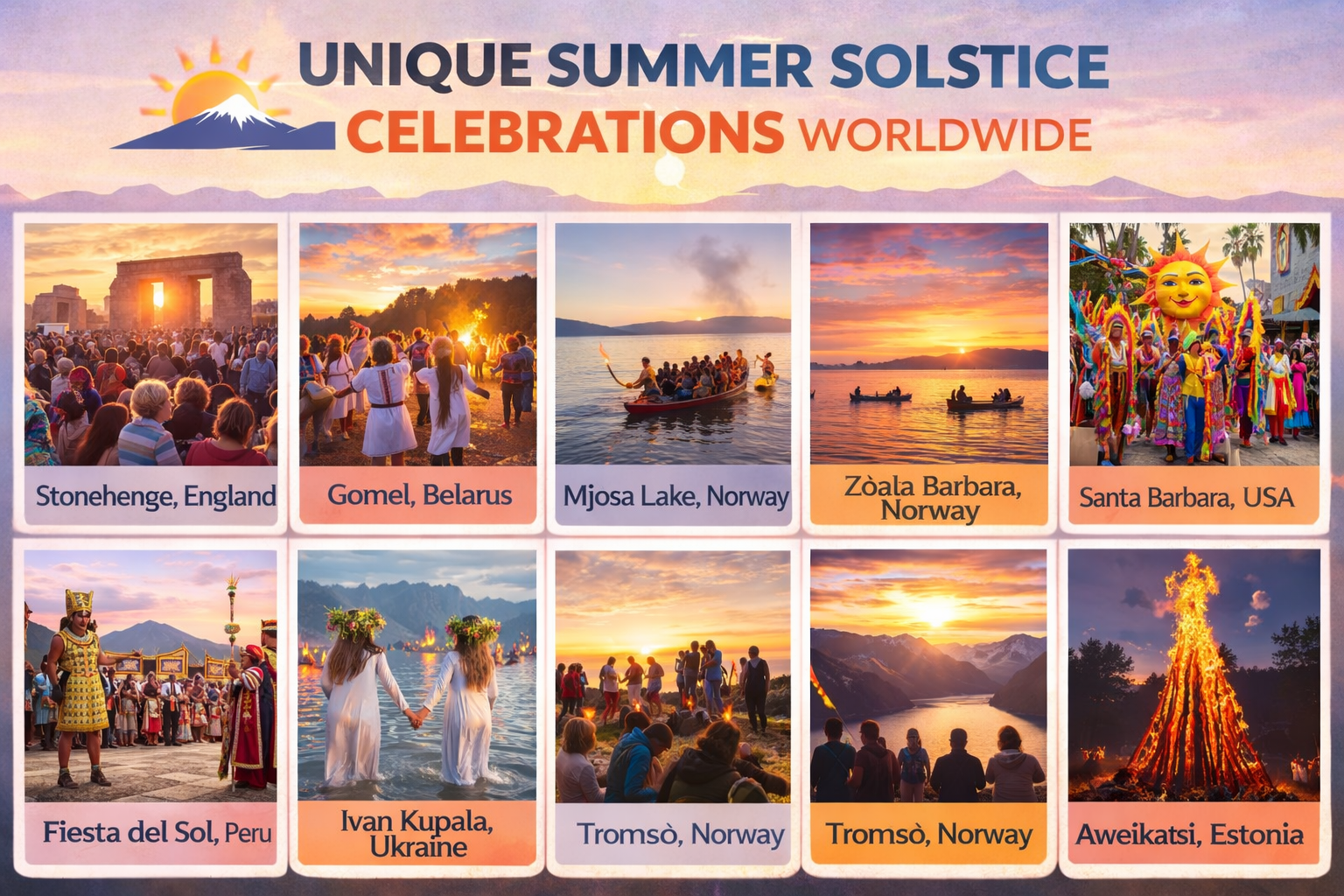
Here are some of the most unique summer solstice celebrations around the world.
Stonehenge Solstice Gathering – England
One of the most famous places to celebrate the summer solstice is Stonehenge.
This prehistoric stone circle, built over 4,000 years ago, is believed to have been designed to align with the movements of the sun. During the summer solstice, the sunrise perfectly lines up with the ancient stones, creating a spectacular moment that attracts thousands of visitors.
Every year, people gather at Stonehenge overnight to watch the sunrise. Druids, spiritual groups, tourists, and photographers all come together to celebrate the longest day of the year.
Music, dancing, and spiritual ceremonies often continue through the night before the sun finally rises behind the famous Heel Stone, illuminating the ancient monument.
Midsummer Festival – Sweden
The summer solstice is one of the most important cultural celebrations in Sweden, where it is known as Midsummer.
Swedes celebrate the arrival of summer with colorful traditions that include:
- Decorating a large maypole with flowers and greenery
- Dancing traditional circle dances around the pole
- Wearing flower crowns
- Sharing meals with friends and family
Typical foods include pickled herring, potatoes, strawberries, and fresh cream.
Because northern countries experience extremely long daylight hours during the solstice, celebrations often continue late into the night under the glowing evening sky.
For many Swedes, Midsummer is just as important as Christmas.
Jāņi Festival – Latvia
In Latvia, the summer solstice is celebrated through a vibrant festival called Jāņi.
This ancient celebration focuses on nature, music, and traditional rituals. People wear crowns made from oak leaves or flowers and sing folk songs known as “dainas.”
One of the most important traditions is lighting large bonfires that burn throughout the night. These fires symbolize protection, purification, and good fortune.
Families gather in the countryside to celebrate with food, music, and dancing until sunrise. Staying awake all night is believed to bring prosperity and happiness for the coming year.
Inti Raymi – Peru
In Cusco, the summer solstice marks the celebration of Inti Raymi, one of the largest historical festivals in South America.
The festival recreates an ancient Inca ceremony dedicated to Inti, the sun god. During the Inca Empire, this ritual was performed to honor the sun and ensure good harvests.
Today, hundreds of performers dressed in traditional costumes reenact the ceremony at the historic fortress of Sacsayhuamán.
The dramatic performance includes music, dancing, and symbolic offerings to the sun. Thousands of spectators gather to witness the spectacular event.
Midnight Sun Festival – Alaska
In northern regions like Fairbanks, the summer solstice brings a natural phenomenon known as the Midnight Sun, where the sun barely sets.
The city celebrates with the Midnight Sun Festival, a lively event featuring music, sports competitions, food vendors, and outdoor activities.
One of the most unusual traditions is playing midnight baseball, where games take place without artificial lights because the sky remains bright even late at night.
For visitors, experiencing daylight at midnight feels surreal and unforgettable.
Kupala Night – Eastern Europe
In countries like Ukraine, Poland, and Belarus, the summer solstice is celebrated through Kupala Night.
This traditional Slavic festival blends ancient pagan rituals with folklore.
Celebrations often include:
- Jumping over bonfires for good luck
- Floating flower wreaths on rivers
- Searching for the mythical “fern flower” believed to bloom only on this night
Music, dancing, and storytelling continue late into the night as people celebrate love, nature, and the arrival of summer.
St. John’s Eve – Spain
In Spain, the summer solstice is celebrated with La Noche de San Juan.
This festival takes place on beaches across the country, especially in cities like Barcelona.
Huge bonfires are built along the shoreline, and people gather to celebrate with fireworks, music, and beach parties.
One popular tradition involves jumping over bonfires or waves in the ocean to bring good luck and cleanse negative energy.
Solstice Celebrations in Iceland
In Iceland, the summer solstice brings nearly 24 hours of daylight.
Locals celebrate by enjoying outdoor activities such as hiking, festivals, and concerts. One unique tradition is playing midnight golf, where players tee off under bright skies even late at night.
Visitors often travel to scenic locations like Thingvellir National Park to witness the endless daylight and stunning landscapes.
Why the Summer Solstice Matters
The summer solstice is more than just an astronomical event. It has deep cultural and historical significance.
| Symbol | Meaning |
|---|---|
| Light | Growth, life, and energy |
| Fire | Protection and purification |
| Nature | Fertility and harvest |
| Community | Celebration and unity |
These celebrations remind us how closely human cultures have always been connected to the rhythms of nature.
Conclusion
The summer solstice is one of the most ancient and meaningful celebrations in human history. From prehistoric monuments like Stonehenge to vibrant festivals in Scandinavia and South America, people across the world continue to honor the longest day of the year.
Each culture brings its own traditions—bonfires, music, dancing, and spiritual rituals—but the message remains the same: celebrate light, life, and the beauty of nature.
For travelers, experiencing a summer solstice celebration offers a rare chance to witness living traditions that have been passed down for centuries.
FAQs
1. What is the summer solstice?
The summer solstice is the day when the sun reaches its highest point in the sky, creating the longest day of the year.
2. When does the summer solstice occur?
It usually occurs around June 20 or June 21 in the Northern Hemisphere.
3. Why do people celebrate the summer solstice?
Many cultures celebrate it as a symbol of life, fertility, and the peak of the growing season.
4. Where is the most famous solstice celebration?
Stonehenge in England is one of the most famous places to watch the solstice sunrise.
5. Which countries experience the midnight sun?
Countries near the Arctic Circle, such as Iceland, Norway, and parts of Alaska, experience almost 24 hours of daylight during the solstice.