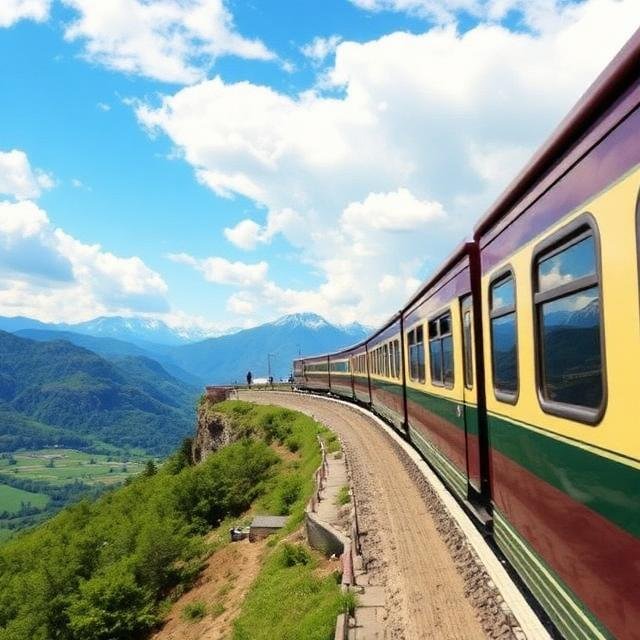
Traveling between cities or regions usually brings one big question: Should you take a train or fly? For many countries around the world, trains are not just a convenient option—they are often the better way to travel. While airplanes are fast for long distances, trains offer something flights often cannot: comfort, scenery, city-center access, and a more relaxed travel experience.
When you travel by train, the journey itself becomes part of the adventure. Instead of spending hours in airport security lines, cramped airplane seats, and distant airports outside the city, trains allow you to step right into the heart of a destination. Large windows reveal landscapes that would otherwise be hidden thousands of feet below in the clouds. You can walk around, stretch your legs, enjoy food, or simply watch the world pass by.
In many countries, train systems are highly developed and incredibly efficient. High-speed rail networks connect major cities faster than you might expect, while scenic routes pass through mountains, forests, coastlines, and countryside. For travelers who enjoy both convenience and beauty, trains often outperform flying—especially on medium-distance trips.
Let’s explore some of the best countries in the world where train travel is better than flying, and why these destinations make rail journeys unforgettable.
Japan – The Gold Standard of Train Travel
When people talk about the best train systems in the world, Japan almost always comes first. The country’s famous Shinkansen bullet trains are known for their incredible speed, punctuality, and comfort. These trains can travel up to around 320 km/h (200 mph), connecting cities like Tokyo, Kyoto, and Osaka quickly and efficiently.
One of the biggest advantages of train travel in Japan is reliability. Trains are famous for running almost perfectly on time, often with delays measured in seconds rather than minutes. For travelers, this level of precision makes planning much easier.
But speed is only part of the experience. Train journeys in Japan also offer beautiful views of the countryside. On clear days, passengers traveling between Tokyo and Osaka can see Mount Fuji rising majestically in the distance. The seats are comfortable, the carriages are clean, and food options—like the famous bento boxes sold at stations—turn the journey into a cultural experience.
Flying between Japanese cities is possible, but airports are usually located far outside urban areas. When you include the time needed for airport security and transportation, the train often becomes the faster and more convenient option.
Switzerland – The Most Scenic Train Journeys
If your goal is to see breathtaking landscapes while traveling, Switzerland is one of the best countries in the world for train travel. The Swiss railway system is famous not only for efficiency but also for some of the most scenic train routes on Earth.
The country’s trains travel through alpine valleys, snow-covered mountains, crystal-clear lakes, and charming villages. Routes like the Glacier Express and Bernina Express are considered bucket-list journeys for travelers who want to experience nature in comfort.
Another reason trains are better than flying in Switzerland is geography. The country is relatively small, and distances between cities are short. A train ride from Zurich to Interlaken, for example, takes just a few hours and offers incredible views along the way. Flying such a short distance would actually take longer when considering airport procedures.
Swiss trains are also extremely well connected. Even small towns and mountain villages are accessible through a network of trains, buses, and cable cars. This means travelers can explore remote areas without needing a car.
For anyone who wants the journey itself to feel magical, Switzerland proves that train travel can be as memorable as the destination.
France – High-Speed Travel with Style
France has one of the most impressive high-speed rail networks in Europe thanks to the TGV (Train à Grande Vitesse) system. These trains can reach speeds of over 300 km/h, connecting major cities like Paris, Lyon, Marseille, and Bordeaux quickly and comfortably.
One of the biggest benefits of train travel in France is that most train stations are located directly in city centers. Travelers can step off the train and immediately begin exploring. In contrast, airports are usually located far from urban centers, requiring additional transportation time.
For example, the train journey from Paris to Lyon takes about two hours. Flying between the two cities might seem faster at first, but once you factor in airport check-in, security, and travel to and from airports, the train often becomes the more efficient option.
France also offers charming regional trains that travel through vineyards, historic villages, and countryside landscapes. For travelers who want to experience the beauty of rural France, train journeys provide a relaxed and scenic way to move from place to place.
Germany – Efficient and Well Connected
Germany’s rail network is another excellent example of why trains can outperform flights. The country’s Deutsche Bahn system connects nearly every major city, as well as countless smaller towns.
High-speed ICE trains travel quickly between major destinations like Berlin, Munich, Frankfurt, and Hamburg. These trains are modern, comfortable, and equipped with amenities like Wi-Fi, power outlets, and dining cars.
Germany is also centrally located in Europe, which makes international train travel extremely convenient. From cities like Frankfurt or Munich, travelers can easily reach neighboring countries such as Austria, Switzerland, or the Netherlands by rail.
Flying between German cities often makes less sense because distances are moderate and train connections are frequent. Travelers can avoid long airport waits while enjoying a smooth and efficient journey.
Italy – A Beautiful and Relaxed Way to Explore
Italy’s high-speed train system makes traveling between its famous cities incredibly easy. Modern trains such as Frecciarossa and Italo connect destinations like Rome, Florence, Milan, and Naples in just a few hours.
The journey between Rome and Florence, for example, takes around 90 minutes by train, making it far more convenient than flying. The trains are comfortable and stylish, reflecting Italy’s reputation for design and hospitality.
Beyond speed, train travel in Italy offers beautiful views of the countryside. Passengers often pass rolling hills, vineyards, historic villages, and ancient ruins along the way.
Since many Italian cities have historic centers with limited car access, arriving by train is often the easiest way to begin exploring. Stations are usually located close to main attractions, making train travel both practical and enjoyable.
India – A Cultural Journey on Rails
India has one of the largest railway networks in the world, connecting thousands of towns and cities across the country. While flying is common for long distances, train travel in India offers something flights cannot: a deep cultural experience.
Indian trains pass through diverse landscapes, from deserts and forests to farmland and bustling cities. Along the way, passengers often interact with locals, share meals, and witness everyday life unfolding outside the windows.
Long-distance trains also offer different classes of travel, from basic seating to comfortable sleeper cabins. For many travelers, overnight train journeys become memorable adventures filled with conversations, chai tea, and unforgettable scenery.
Although flights are faster for very long distances, trains remain one of the most authentic ways to experience India.
Why Train Travel Can Be Better Than Flying
There are several reasons why trains are often the better choice in many countries:
| Advantage | Train Travel | Flying |
|---|---|---|
| City Access | Stations usually in city centers | Airports often far outside cities |
| Security Time | Minimal or quick | Long security and boarding procedures |
| Comfort | More legroom and ability to move | Limited space |
| Scenery | Beautiful landscapes visible | Mostly clouds |
| Environmental Impact | Lower carbon emissions | Higher emissions |
Trains also allow travelers to relax during the journey. Instead of worrying about turbulence or strict boarding schedules, passengers can read, work, enjoy meals, or simply watch the landscape roll by.
Conclusion
While flying remains important for long-distance travel, trains often provide a better overall experience in many parts of the world. Countries like Japan, Switzerland, France, Germany, Italy, and India demonstrate how efficient rail systems can transform travel into something comfortable, scenic, and memorable.
Train journeys offer more than transportation—they provide time to slow down, observe landscapes, and connect with the places you are visiting. Instead of rushing from one airport to another, travelers can enjoy the rhythm of the rails and discover beauty along the way.
For anyone who wants travel to feel less stressful and more meaningful, choosing the train might just be the best decision.
FAQs
1. Are trains faster than planes?
For short and medium distances, trains can actually be faster when you include airport security, boarding time, and travel to and from airports.
2. Which country has the best train system in the world?
Japan is often considered to have the best train system due to its speed, reliability, and punctuality.
3. Are train journeys more environmentally friendly than flights?
Yes. Trains usually produce significantly lower carbon emissions compared to airplanes.
4. Is train travel comfortable for long journeys?
Many long-distance trains offer reclining seats, sleeper cabins, and dining cars, making them comfortable for extended travel.
5. What is the most scenic train country?
Switzerland is widely regarded as one of the most scenic countries for train travel due to its mountain landscapes and panoramic rail routes.